28 December 2008

DSCN0016
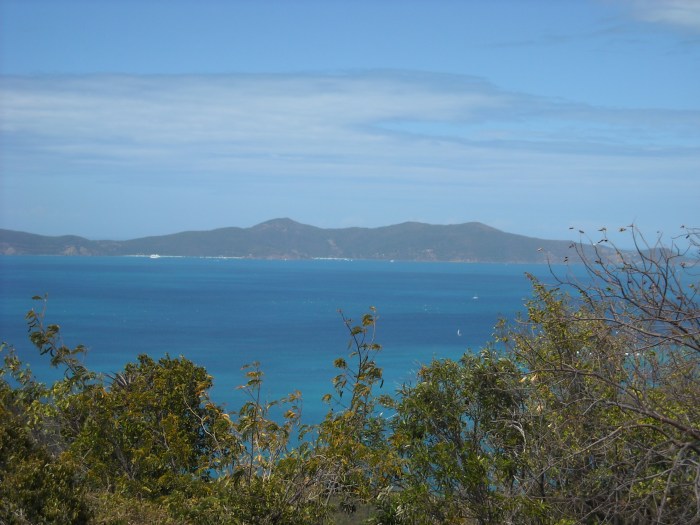
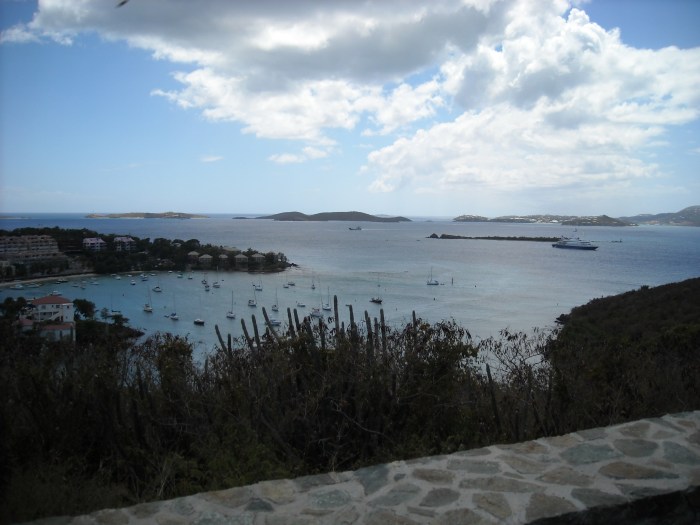
Johnny’s Lookout


For Years


For years I could see the closest torch
And related to its grace.
How it moved, and where it went,
And why it stood in place.


As I approached this guiding light
I found a frail old man;
Weathered soul and tired mind;
Alone and without plan.


He questioned faith and talked
Of Love, while staring into night.
For hurt he was, and blind
As well, from staring at his light.


So many steps, so many plans,
Had led him to this fate.
How strong he was, but now it’s lost,
So I must take his place.


********************************************************************


I am coming to the end of my planned stay on the island. I have stayed a few months longer than I initially intended, but who could blame me. I was able to defer re-enrollment into my third year of school and will be rejoining the class that started a year behind me. I will begin again in late January.


The last few days have been challenging emotionally. It is the first time ever that I have celebrated the holidays away from home and family.   It also marked the first Christmas eve that I have left out sunglasses, an energy drink, and a bottle of sunscreen,  rather than the traditional cookies and milk for Santa and his reindeer.


During the last 8 months I have developed some general familiarity with the natural history of cancer. Most, but not all, of the clients that I have met while here have had an oncologic diagnosis.  I am no expert, but with the limited amount that I have retained,  I’m led to the conclusion that poor Rudolph’s red nose is most likely a malignant melanoma.  Despite this, all he can do is just keep leading, and giving his heart to everyone else.  It may be the eggnog talking, but I think most of the residents somehow share Rudolph’s sense of bravery and purpose.


It is endlessly strange for me to see hundreds of blinking lights rigged up in the palms that sway in the 85 degree heat of the island.   It certainly has provided for a wonderful effect.  There is a sort of Clark Griswold-esque magic to the decorations that adorn the grounds of Altamount this holiday week. The added touch of putting up and decorating a  real balsam fir was an absolute home run for encouraging the holiday spirit. It was donated and shipped down by the family of a past client from Vermont.  It was the property owner Johnny who was courageous enough to scale the palms and rig the lights last week.


A sense of indomitable courage is exactly how I would describe one of Johnny Sullivan’s most admirable character traits.  Not only am I impressed by the holiday decorations, but by  the whole thing he has created down here.  It was Johnny who took the biggest risk in the joint venture that was now Altamount Hospice Inc. – after all it was his property.


Eventual business partners, Johnny and Andrew Simon have known several dimensions to their life-long relationship. They were childhood friends, high school baseball team mates, frat brothers at Northeastern University, and now they were neighbors again. At this point, they certainly do not hesitate to wax nostalgic on any of these past incarnations of their relationship.  As they had grown up and cultivated mutual understanding and respect in one another, these friends still could not be separated.


 Johnny talks about the history of the island, and his land, with any and all opportunities. He will often reflect on his grandparents and their gift of the property. They had willed it to him after their passing.  I am sure they would be impressed with what he has done with the place. Now it was a business, an oasis, and one stair step closer to where Johnny’s beloved grandparent hopefully were.  Johnny has commented that he once read a quote that the virgin islands was a place where Angels stopped to rest before leaving the earth and heading to the heavenly realm. His place was a literal manifestation of this.


Although he doesn’t have a medical background, Johnny’s business savvy and impressive work ethic serve him well to contribute to the day-to day operations around here.  He is really the de facto business manager, head groundskeeper, and superintendent of this place.  He stays very busy – and I suppose this is good for him.


It was back a few months ago that during a conversation regarding one of the clients, Johnny confided in me that he is a recovering alcoholic.  He has been sober for almost 10 years, and isn’t ashamed to talk about his history. In fact he is, and very well should be, proud of his sobriety.


Johnny attributes the spiritual and physical transformation that he  experienced to the purpose and meaning he has found in Altamount.  Johnny wasn’t a religious guy. He didn’t follow the traditional 12 step program to recovery, and he certainly didn’t develop a consciousness contact with a specific God.  He did make a fearless decision to turn his life around – and in that process, it helped him , and many other breathe easy again.


I recently learning about the importance of taking a “spiritual history” the other day from a visiting chaplain.  Immediately I was appreciative of her approach. She told me that it is critical to not project our own beliefs (or lack thereof) onto those we serve.


She commented, from her perspective,  “most folks that I see these days were actually believers in some other ambiguous higher power, and not any specific individual religion. ” This developing  truth led her to always approach spirituality in her clients by asking the simple question


“What helps you breathe?”


She shared that the word spirituality is actually derived from a Latin word that translates “to breathe”. Used in a different context, also represents the Latin phrase “to die.”  It was in this understanding that she found it particularly a helpful approach with those that she supported in the hospice.  She could cut to the chase quickly appreciating how to support the life of the dying person she was with.


She detailed that for some individuals, the answer is simply prayer, attending church, or developing and practicing their faith.  For others, it is more externally focused by doing good unto others and projecting positive vibrations.   For some it gets even more interesting and sometimes convoluted.


After learning from the chaplain, I now have a better sense of how Johnny could have developed the strength to conquer his addiction and maintain a healing inertia.  He found his breath in his current vocation.  He blended his natural skills and interests, and coupled those with a service that could alleviate suffering in this world.  With lungs full of air,  he was inspired to maintain sobriety and keep providing this blessed service to the world.

 

DSCN0077
breathing easy on the north shore


30 November 2008

DSCN0035
view towardsTortolla


Looking Inward


Looking inward, he saw many roads.
Some traveled; some avoided;
Some stumbled down…


Looking outward, he saw many roads.
Places to go; places to stay away from;
Places to fall…


Opening his eyes, he saw it true.
The road under his feet;
Firm, warm, and straight…


“Perhaps I should keep both
Eyes open more of the time;
Life shouldn’t be so ambiguous.”


********************************************************************


The past seven months I have come across some of the universe’s most amazing souls. Each day I find myself catching glimpses of both heaven and hell, yet somehow I am yet to lose my mind.  To tell you the truth, I feel like I am only gaining insight .  I feel so blessed to be learning how to cultivate my faith and courage from the world’s best gurus – residents and staff alike.


Of the two physicians, I have been able to connect on a more comfortable level with Andrew. I’m not sure if it is because he is closer to my age, or rather just  because he is less weird than Peter. Either way, or most likely both, Andrew’s Tao and guidance have granted me a certain confidence and hope in what I am capable of.


One of the most important things that I have garnered from my time learning with Andrew has been the importance of modeling as a teaching tool.  Whether it was an illustration of how to talk to a dying person and their loved ones, or an example of how to effortlessly filet a yellow fin tuna, the method works.


Andrew followed Peter’s lead in becoming a physician, but he certainly followed a different path. It wasn’t until after a long-haired, post-bacculaureate, stent in Nairobi, Kenya (as part of a Peace Corps ), and a subsequent work on an AIDS campaign in Botswana (as support staff for Doctors without Borders) , that he acknowledged his fate as a physician.  When Andrew finished his residency in infectious diseases at a Philadelphia teaching hospital, he was naturally drawn to a fellowship in palliative care in Boston.


Given his experiences and training, he thought that perhaps he could become an expert in helping support those living with HIV and AIDS.  In Boston, while in the presence of some of the world’s foremost palliative care guides, he blossomed. He honed his craft and imagined his life ahead.  As his personal motivation and vocational goals changed after his own fathers death, he became acquainted with  the prospect of life as he lives it now.


Andrew has schooled me in much technical and theoretical medical jargon during the time I have been here. In all of the details and different words, the same message comes through.  He has taught me the importance of being consciously accepting of one’s own transient nature; in moment, in time, and in life…


Andrew took me out to the mooring earlier this afternoon to help him work on repairing some minor damage to the fiberglass deck on the boat. Last week Peter had allegedly dropped an anchor on deck, and splintered off a good chunk of one of the aft gunwales.   After, sanding, painting, buffing, and glazing; he showed me the real project he has been working on.


The “project” started nine months ago while the brothers were on a day trip to Tortola. While there, they stumbled upon a amateur rock sculptor with affinity for absinthe, and a desire to share his craft.  They saw some of his work engraving granite, and they had a moment of epiphany. They would work with this guy to create a wonderful and morbid symbiosis.


In the months that followed, the brothers commissioned the sculptor to produce glorious and simple headstones for the deceased. Several of the stones were on display in the local cemetery in St John – others were shipped back stateside to accompany those who had commissioned them. Andrew was very excited about the whole process of learning a new trade and found himself spending more time with the sculptor and learning some of the tricks of his craft. As it turns out, he had his own special project in mind.


The product of his wildly creative endeavor now lies 16 feet below the Caribbean Sea. It  lies in the form of a 3000 pound granite block, complete with iron chains and rope attached. This of course is the mooring or foothold to keep the “Aqueous Humor” in place.


Andrew handed me a snorkel and mask from the cabin and said, “take a look at the mooring chains- let me know what you think…”


As I pressed the face mask against the warm blue surface of the water I looked down to see its beauty… The granite block that his boat was anchored to had writing on it –  The son of a bitch had engraved his own headstone…


1967 –
Son, Brother, Physician, Friend

Andrew Jacob Simon

Float on…


I am still perplexed… When I came up smiling, Andrew shared with me that when he dies he would like to be cremated with his ashes spread at sea. Right there – at the mooring. It was his favorite place in the world, his own personal respite. His wish was to become feed for the fish, and fodder for the imagination of those grieving . He will always be a true artist my mind….


A couple of Andrew’s early  designs

28 October 2008

RSCN0102
“Walter”


Right Aspiration


Reflection stared back blankly
And quickly raised a brow.
She smiled slightly, closed her eyes
And then she spoke out loud.


“I have a question posed to you,
My ever-changing friend;
If I believe, and keep my faith,
Will I see where I end?”


Eyes open, stone walled face,
Reflection gave some thought.
“First ask yourself these six words;
What is it that you want?”


When she sought this answer,
Then it’s Truth that she would find.
And in its ways, She felt Its grace
And then came peace of mind.


****************************************************************


I am slowly coming to the conclusion that working with individuals who are dying is not for everyone.  Over the past couple of months we have had a number of nursing aids come and go from their positions at Altamount. I think that a couple of them couldn’t take it emotionally, and another one used the opportunity as a stepping stone prior to heading to the states for nursing school in Miami.


Rita Lucas – our latest nursing aid, has been here for a month now. She and her family reside on the Island.  She seems to have what it takes to do well – a lot of heart and patience. Her family has been settled on the island for five generations dating back to the end of the sugar plantation/ slavery era.   As a medical student (currently on sabbatical), I feel confident to assume that there is fixing to be a sixth generation that will be coming onto “the rock” in no time flat.


Rita is six months pregnant, and she glows when she smiles. She and her husband Edward live down the street from Altamount in the house she grew up in. They are young parents to be, and they sure seem in love. Edward is always over at lunch time bringing her warm comfort food and fresh water; real sweet stuff.


Rita is the youngest of four girls. She is the only one of her sisters that was married. To say that her family is excited is an understatement.  Rita had introduced me to her father one day after we bumped into each other in town. Her father  is a large and imposing man with an enormous edentulous smile.  He was clearly going to be a proud grandfather – and he tells everyone in earshot about it.


Rita and I are about the same age, and we both have aspirations of becoming physicians someday. From what I have witnessed, she has natural compassion, intelligence, and drive in abundance.  I would be proud to have her take care of me someday. I think because of our similar age and professional goals, she has confided in me as a peer about her own struggles in this new position.


While commiserating on the prospects of potential provider burnout, she even introduced me to her “personal therapist”.  This analyst is actually her favorite local deer – her name is “Wanda”.  Apparently she goes by this name as she has no home and “wandas all over the island”.  The doe appears to be missing part of her right ear but apparently she is a good listener.  I suppose most animals are  good that way.


Wanda is actually one of many feral animals living on St. John.  It is not uncommon to walk up onto a group of donkeys, cows, chickens, cats, peacocks, or college age men just milling around.   Wanda also happens to spend a lot of time at Rita’s house eating the grass and flowers – much to her fathers chagrin.


There is something very special about the awareness of a new life on its way that is disarming to people. I suppose it leads to really awkward moments for women who are pregnant – like when they are touched on the belly by complete stranger in the elevator. In this often surreal environment of a residential hospice, there is something even more unique and wonderful about the awareness.


With the clients, there appears to be some palpable but unspoken joyful hope that is created when they see Rita waddling about. If even for an unconscious moment, they seem to become aware of the cycle of life, death, and rebirth. In that instant they are free of that existential fear that seeps into every other moment of their days.


Rita’s presence really draws them out – or maybe back in to the world to connect with that life force that wanes within themselves. I have heard some of the clients who are mothers themselves talk of there own experiences to Rita. In a few cases when the clients children were present, it was an amazing conversation bridge.


In this unique atmosphere it is customary to talk about death. It is actually encouraged as a necessary part of the process of transition for both client and families alike. It is an infrequent treat to be surprised by the promise and conversation of new life. Rita is by far the most beloved staff member here by the residents and she knows it. Well at least she keeps reminding me of it.


DSCN0073
still waters run deep in Pillsbury Sound


Rita and the clients have also been teaching me how undeniably important it is to respond to patient emotions. I think for her it is easy. She clearly possesses a natural grace. I on the other hand, lack this completely. Although I feel like I am confident, polite, and likable enough, in this environment, it is really all about developing a reflective presence.


As a second year medical student, my previous understanding had been that in the event of a patient spiraling towards death, my inclination should be, “don’t just stand there, do something!” I am beginning to learn it that in the appropriate situation, it can be even more powerful and helpful to “don’t do anything, just stand there…”


I recognize Rita’s skill in listening to the clients – she never interrupts the moments she spends with them to provide some data point or unwarranted explanation. When I watch her, I wonder how many times I have seen patients roll their eyes at physicians rambling on about the myriad of things that could or couldn’t be occurring with their bodies. As if detailing a more extensive differential diagnosis makes them more effective as a healer. It strikes me that sometimes pontificating medical assumptions and diagnostic possibilities are useless to the patients. Sometimes they just need you to be there with them in that moment, to feel safe and well cared for.


Rita has taught me to take my own “emotional temperature”. If I feel it rising, I can use that as a tool to understand what the patient is projecting. Am I feeling anxious, or sad, or desperate – well, maybe the clients are telling me something without words that I should follow up on. In following up, I have realized that coming from a place of curiosity, rather than presumptive understanding is key. I have begun to use the phrases “tell me more about…” or “help me understand…” When assessing the issues that are concerning them.


As I learn more every day, about life, death, and myself, I am struck by the possibilities. These lessons I am learning stretch far beyond developing a skill set to be a better clinician some day. They in fact are making me a better and more engaged person today.